

Most pokies advice treats tilt as a willpower problem – take a breath, count to ten. It ignores how Australians play: leaning over a phone at the pub, on a bus through Canberra, or during smoko. Tilt control built for mobile needs different priorities.
The framework maps to how maths behaves on a small screen. It draws on applied maths and slot development across Melbourne, Manila, and Malta. Players wanting the onboarding side mapped out can check the working note at https://logincrocospins.com/ before they start.
Mobile Is the Real Playing Field
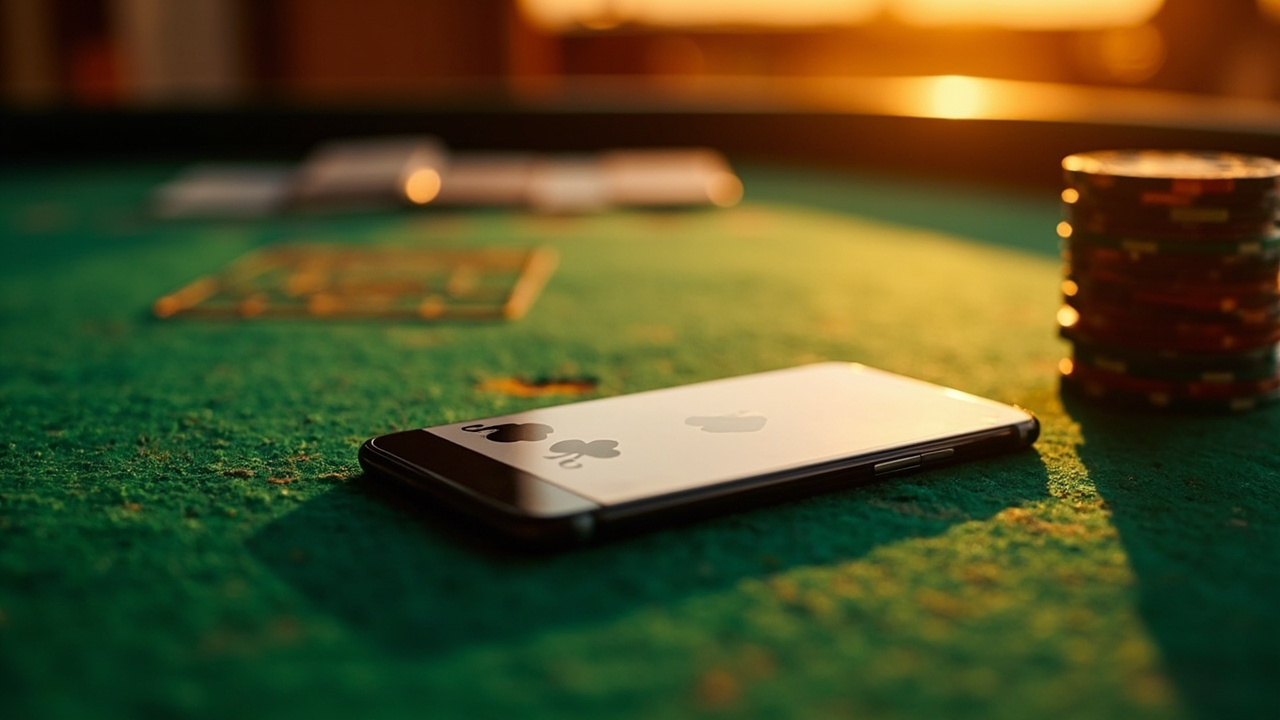
When tilt strategy is designed at a desk, it usually assumes a seated player at a fixed machine with a clock on the wall. None of that holds on mobile. The phone reshapes the variables: session length shortens, attention fragments, and the spin button sits centimetres from your thumb at all times.
On mobile, tilt rarely arrives as a single dramatic loss – it sneaks in through micro-decisions over a 20-minute bus ride from Belconnen to Civic, or across a long arvo of small, distracted bets. Recovery is harder because the device never tells you to stop, and the casino app or browser tab stays one tap away.
A mobile-first approach prioritises friction over willpower, engineering the environment so impulse has nowhere to land rather than relying on discipline.
A practical mobile-first tilt setup looks like this:
- Pin a session timer to the home screen before the first spin.
- Set a hard deposit cap inside the cashier before logging in.
- Switch on biometric login so re-entry requires a deliberate pause.
- Disable notification banners for the casino app during the session.
- Pre-write a single-sentence stop-loss rule and pin it above the cashier.
It helps to remember that random number generators in licensed online casinos are independently audited for fairness, so short-term variance is doing the talking. Once you accept that, tilt stops being about chasing and starts being about pacing across the touch surface.
What Tilt Looks Like on a Phone
The Micro-Decision Loop
Mobile pokies compress decisions into a faster loop than any land-based machine ever did. A spin takes three seconds, the reels settle, and the next spin is one thumb-press away. There’s no physical gap, no coin hoppers, no attendant walking over. In production work at Skywind, I tracked session lengths and saw the average spin-to-spin interval drop 41% on mobile compared with terminal play in clubs. That compounds: over a typical half-hour, a phone player may execute roughly twice the bet count a club player does in the same window, meaning variance compounds faster too. The maths behind why short streaks feel meaningful even when they aren’t is exactly the territory that pokies variance guides walk through with the cleanest worked examples. The same logic drove slot development choices on near-miss frequency: the brain treats a near-miss as a partial win regardless of the maths.
Banking Cadence and Recovery
Reload friction shapes tilt more than most players realise. On a club terminal, walking to the cashier breaks the session; on mobile, the cashier is two taps inside the app, sitting behind the same biometric prompt. That changes the recovery curve: cooling off means ignoring a one-tap action rather than relocating. Some states cap the number of poker machine licences available in clubs and pubs, which keeps terminal density in check; phone play has no equivalent physical gatekeeper. The safer pattern is to set a hard deposit ceiling before the session, and treat any in-session top-up as a red flag. Two thresholds work: a daily deposit cap set 30% below usual weekly spend, and a single-session loss limit that auto-locks the wallet when hit. Neither asks for willpower at the moment of temptation, which is the entire point of mobile-first tilt design.
The contrast lined up side by side:
| Tilt moment | Club terminal | Mobile |
|---|---|---|
| Reload decision | Walk to cashier | Two taps inside app |
| Loss stack visible | Yes | No |
| Session boundary | Distinct entry and exit | Blurs with daily routine |
What Players Actually Need from Mobile Tilt Tools
Players don’t need a motivational poster. They need the friction engineering professional studios bake into session design, applied to the small screen in their pocket. Players who reckon tilt is purely willpower usually learn otherwise. The point of any mobile-first tilt framework is to translate the maths of variance and the psychology of loss-chasing into tools the phone can enforce automatically.
Two player needs shape the rest. First, deposit and loss controls must live inside the cashier, not behind help-page links in responsible play menus. A daily cap set with two taps before the first spin changes behaviour better than any self-imposed rule. Second, the session timer needs to be visible during play, not after. A banner at the top beats a follow-up email. These are practical fixes, not philosophical commitments.
Players already operate inside a landscape where The Lott operates lotteries across most other Australian states, and where The Lott’s broader retail footprint sits alongside licensed club terminals in the ACT. Mobile pokies sit alongside those formats rather than replacing them. Tilt design has to assume the player is juggling Keno draws and lotto nights the same week. Treating mobile play as a separate habit misses the point. The toolkit that wins respects the rest of the player’s week.
Most tilt advice fails because it asks the player to be someone they’re not at the moment of temptation. A mobile-first framework swaps willpower for architecture, putting screens, biometrics, and cashier caps between the impulse and the action. Across sessions on the bus, in the pub, or during a slow arvo at home, tilt stops being a personality test and starts being a system. The phone is where tilt shows up first, and the system matches the phone.